IIServices · The Trade
Custom kitchen cabinetry, built to the room.
The kitchen is the most used and most valued room in a Cape house. Cabinetry is what makes it feel custom, and where the difference between good and forgettable actually lives.
There is no single right kitchen. The right one depends on how you cook, the style of your house, and your budget. Below is the plain language version of the choices, so you can walk a showroom or a proposal knowing what the words mean.
Door styles
The door face is what you see, and it sets the whole tone of the room.
- Shaker
- A flat center panel inside a square frame. The most versatile look, at home in a classic Cape or a modern kitchen, which is why it is the most requested.
- Raised panel
- A center panel with a profiled, raised field. Traditional and formal, it suits older and more decorative houses.
- Slab or flat
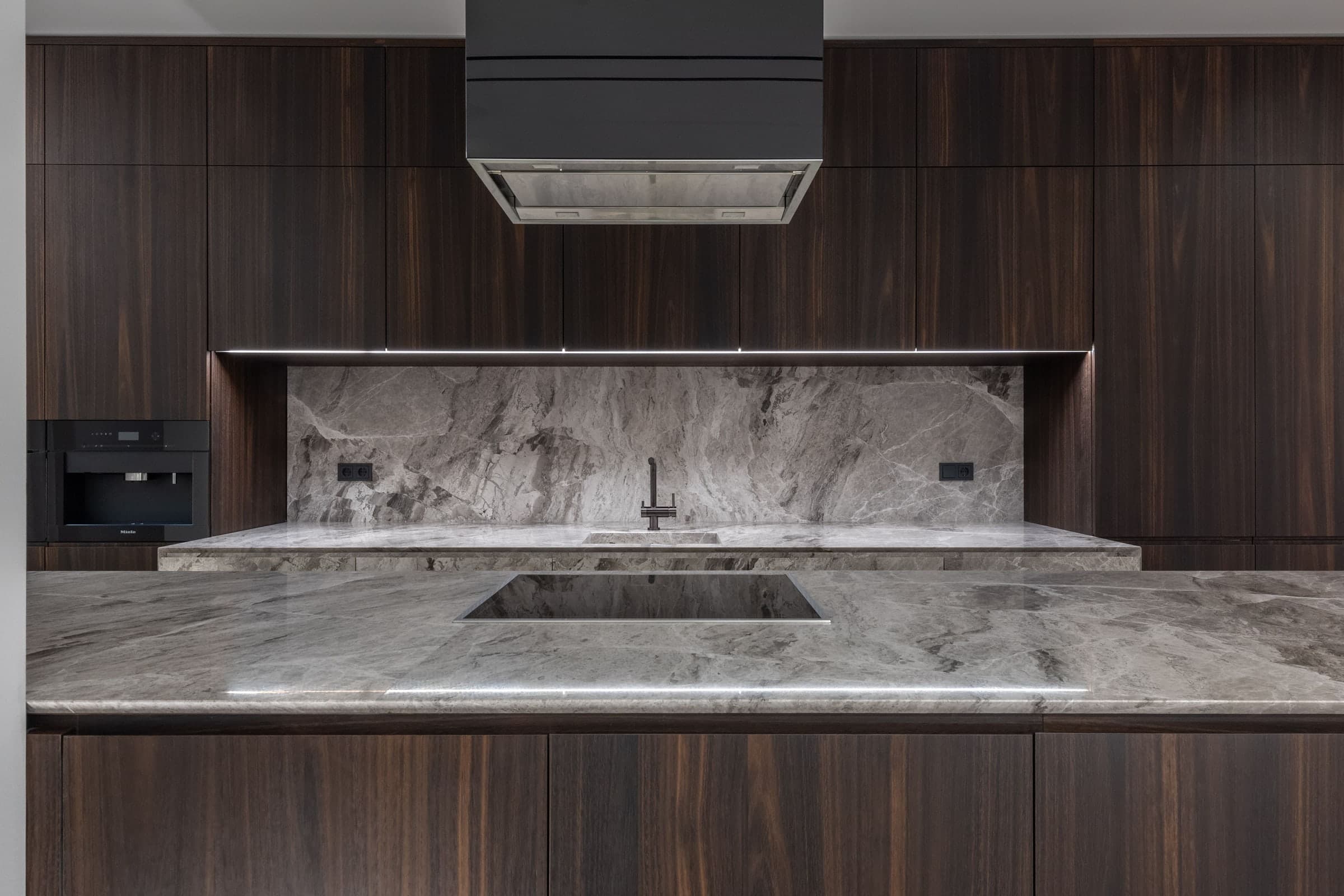
- A single flat door with no frame. Clean and modern, it shows off the wood grain or a bold paint color and wipes down easily.
- Beadboard
- A paneled door with vertical beads. Reads cottage and coastal, a natural fit near the water.
- Inset
- Doors set flush inside the frame rather than over it. The most precise and most expensive to build, it is the mark of a custom kitchen.
- Glass front
- Glazed uppers for display and to lighten a wall of cabinetry. Often mixed with solid doors, not used everywhere.
How the box is built
- Framed (American)
- A face frame across the front of the box. Strong, traditional, and forgiving of the out of square walls that every old house has.
- Frameless (European)
- No face frame, full access to the interior, and a bit more usable space. A cleaner, more modern look that demands tighter tolerances.
- Overlay and reveal
- Full overlay hides almost all of the box for a seamless face; partial overlay and inset show more frame. This decides how much line you see between doors.
Materials
- Plywood boxes
- Stronger than particleboard, holds screws and hardware, and shrugs off a wet Cape summer better. Worth it under a stone counter.
- Solid wood doors
- Maple and poplar for painted work, oak, cherry and walnut for stained. The species is chosen for the finish you want.
- Finish
- Painted, stained, or natural. Painted hides the joint and suits most Cape kitchens; stained shows the grain and warms a room.
How to choose
Start with how the kitchen is used and the age of the house, then let the budget set the door style and materials. We will tell you honestly where the money matters, like plywood boxes and good hinges, and where it does not.
Installed in place
The boxes may arrive on a truck, but the fit happens here, scribed to your walls, which are never perfectly straight. That scribing, plus the crown, light rail and hardware set to a template, is the part you cannot buy in a box.
How it is quoted
A site visit, then a written proposal with scope, materials by name and grade, allowances, schedule and price. The number we quote is the number we hold.
Put it in writing.
A site visit and a written proposal cost nothing. Scope, materials, schedule and price, in a document you can hold us to.