IIServices · The Trade
Exterior trim, the lines that hold the elevation.
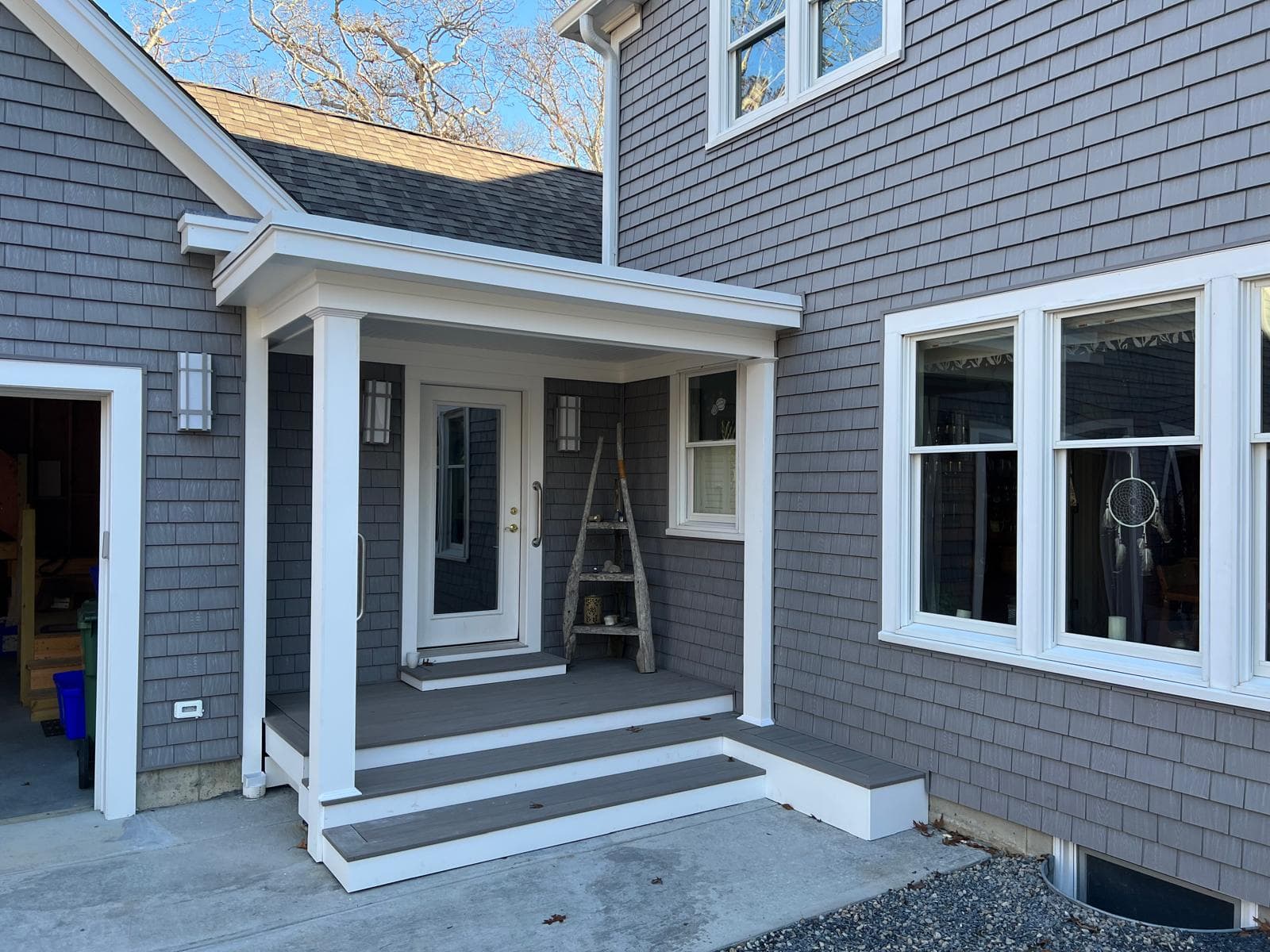
Exterior trim is the frame around everything, the fascia, soffit, corner boards and casing that hold a facade together and take the first hit from the weather. It is where rot starts and where a house shows its care.
Trim is unglamorous and it is where most exterior rot begins, so the material choice matters as much as the look. Here are the pieces and the options.
The elements
- Fascia and soffit
- The board at the roof edge and the underside of the overhang. They close the roof to the weather and carry the gutters.
- Rake and frieze
- The trim running up the gable and across under the eave. The lines that define the roof against the wall.
- Corner boards
- The vertical boards at the corners that the siding dies into. A clean, rot free corner is a mark of good work.
- Window and door casing
- The trim framing every opening, flashed at the head so water runs out and not in.
- Water table
- A trim band low on the wall that sheds water away from the foundation.
Materials
- Clear cedar and pine
- Traditional wood trim, primed on all sides and painted. Looks right on an older house, and needs paint kept up.
- Cellular PVC
- A rot proof, insect proof board that holds paint well and never needs replacing at the wet spots. The modern choice for fascia, corners and casing on the Cape.
- Composite
- Engineered trim boards, a middle ground between wood and PVC in cost and durability.
Wood or PVC
Where water collects, at the base of corners, under sills and at the roof edge, cellular PVC simply outlasts wood and never rots. Where the look of real wood matters on a historic house, we use clear stock, primed all around. Often the honest answer is both, PVC where it is wet and wood where it shows.
How it is quoted
Measured on site, the material named by piece, flashing detailed, and the price in writing under our workmanship warranty.
Put it in writing.
A site visit and a written proposal cost nothing. Scope, materials, schedule and price, in a document you can hold us to.