IIServices · The Trade
Wall paneling and finished ceilings.
Paneling is the woodwork that turns a plain room into the room guests remember. Done right it adds order and calm; done carelessly it adds lines that never quite meet.
Paneling and ceiling treatments are where a house stops being drywall and starts being architecture. Here are the common types, on the wall and overhead.
Wall paneling
- Wainscot
- Paneling on the lower third of the wall, capped with a rail. The classic Cape treatment for dining rooms, halls and stairs.
- Board and batten
- Vertical boards with narrow battens over the seams. Simple, sturdy and at home in a coastal house.
- Raised panel
- Framed panels with a raised field, the most formal and traditional option, often full height in a study or library.
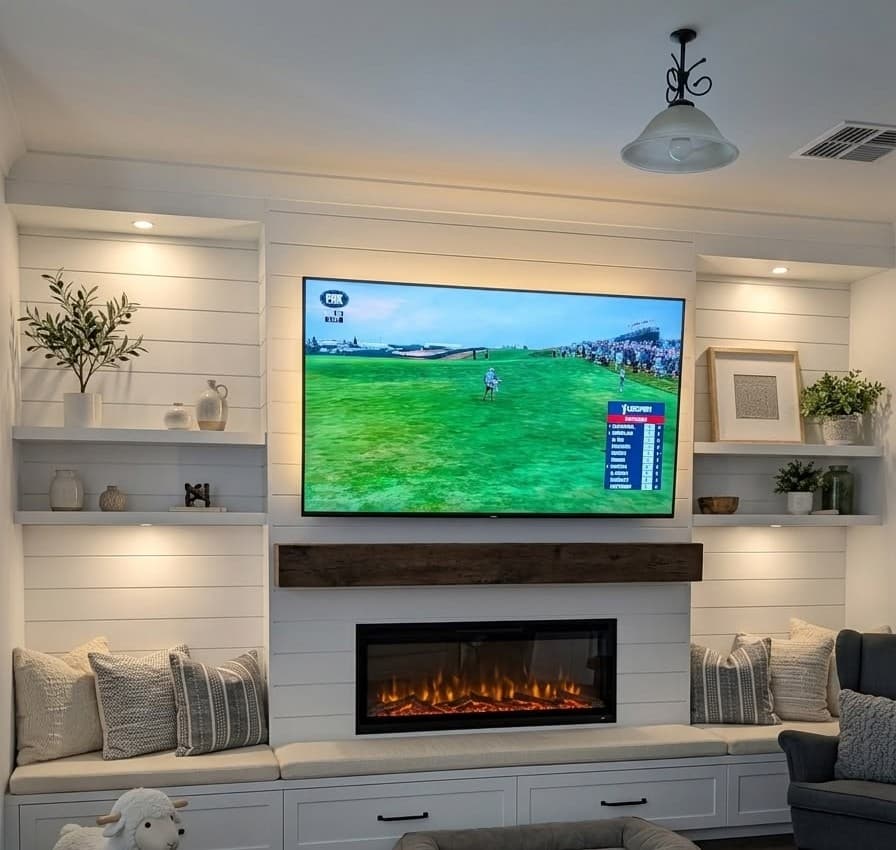
- Shiplap
- Horizontal boards with a clean reveal between them. Reads modern farmhouse and coastal, popular and easy to live with.
- Beadboard
- Narrow vertical beads, cottage in feel, used on walls, porch ceilings and the backs of built-ins.
Ceilings
- Coffered
- A grid of beams with recessed panels. The most architectural ceiling, it gives weight and quiet to a main room.
- Beamed
- Exposed or applied beams that add rhythm and warmth without the full grid of a coffered ceiling.
- Beadboard and shiplap ceilings
- Paneled ceilings on porches and rooms where you want the woodwork overhead to match the walls.
Layout is the craft
The whole skill is in the layout, so panels land even at the corners and around the openings, and the beads or battens line up with the windows. We draw the panel rhythm before we cut, because a wall of paneling that is off by an inch is off forever.
How it is quoted
A layout drawing comes with the proposal, so you see the rhythm on paper first. Scope and materials in writing, finished under our workmanship warranty.
Put it in writing.
A site visit and a written proposal cost nothing. Scope, materials, schedule and price, in a document you can hold us to.